PPWR this week: crystal glass, label delay, AR vote, German fines

A crystal glass derogation, a delayed labelling act, a Parliament vote on authorised representatives and German fine tiers: what each changes for packaging compliance teams.

EU and US packaging policy, materials and industry news, with what it means in practice.
A crystal glass derogation, a delayed labelling act, a Parliament vote on authorised representatives and German fine tiers: what each changes for packaging compliance teams.

Mars wants every ink and coating disclosed, Herma certifies cold wash-off PP labels, Pulpex opens a fibre bottle plant and Brussels consults on bio-based feedstock.

Oregon’s EPR law won at trial, Colorado’s faces a double-fee claim, and California’s recyclability definition is under attack. What brand owners, distributors and converters should do while the courts decide.
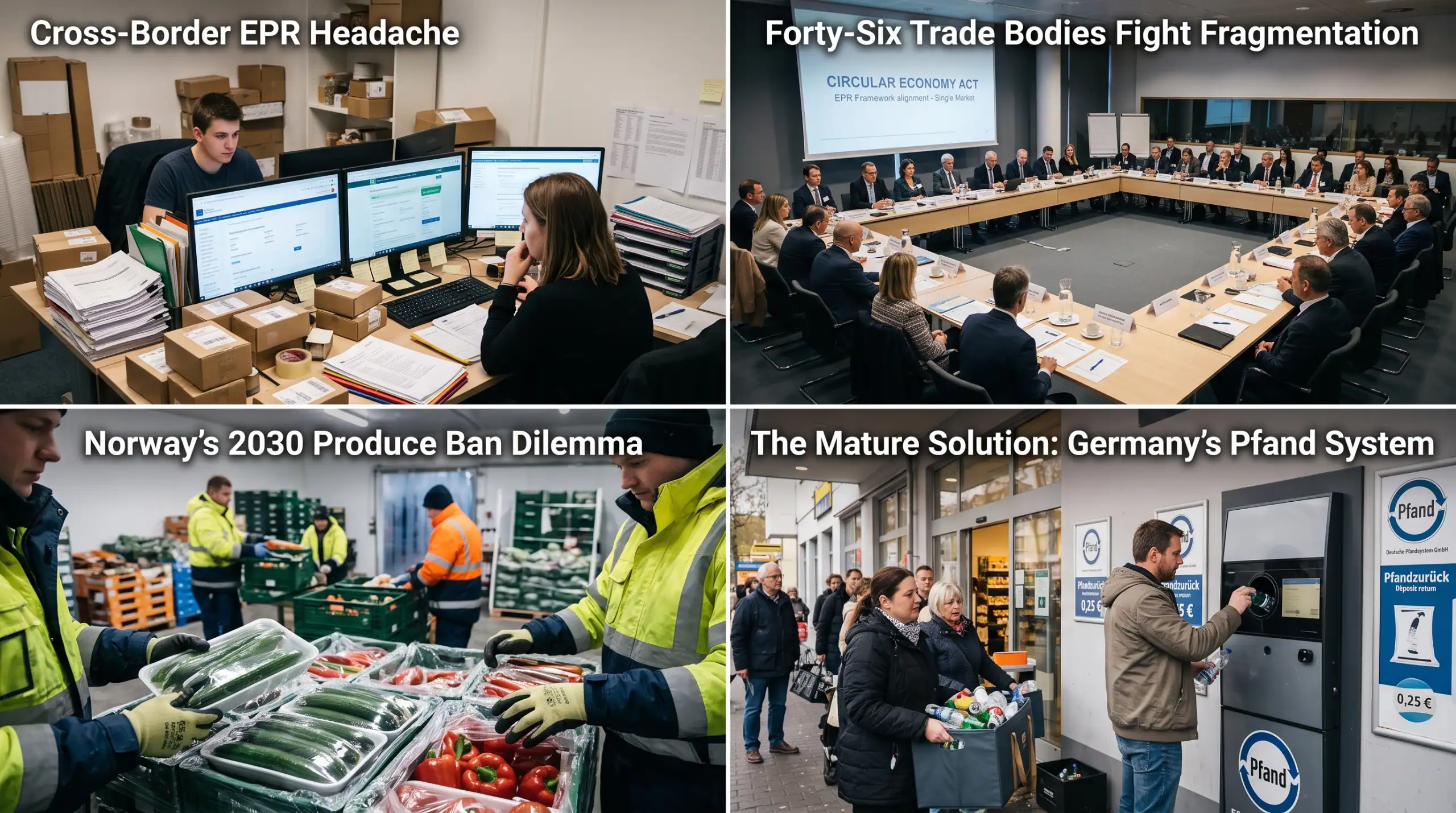
Three PPWR flashpoints this month show the regulation under pressure: SME representative relief, calls to harmonise EPR, and Norway’s produce packaging exemption request.

Recycled content targets are colliding with feedstock limits in both paper and plastic, pushing brand owners toward new testing, new adhesives and new ownership questions in fibre supply.

A federal court upholds Oregon’s packaging EPR law, California’s SB 54 and SB 343 face expanding litigation, and Minnesota’s PFAS data show measurable compliance gains.

Two months after the PPWR took effect, MEPs scale back EU-wide EPR relief to SMEs, PFAS limits lack an agreed test method, and buyers want proof in contracts.

Europe’s paper recycling rate holds near record highs, yet fibre and flexible plastics both face a harder question: does “recyclable” mean materials actually come back as usable feedstock?

Legal challenges to state EPR laws advance in federal court as Washington launches battery rules, California vetoes a labeling bill, and federal PFAS legislation returns to Congress.

One month into general application, PPWR retrospectives flag e-commerce empty-space compliance, PFHxA assessment errors, and SME pressure to delay the authorised representative rule.